
New Floors Built for Everyday Living
Services List
Contact With us for any advice
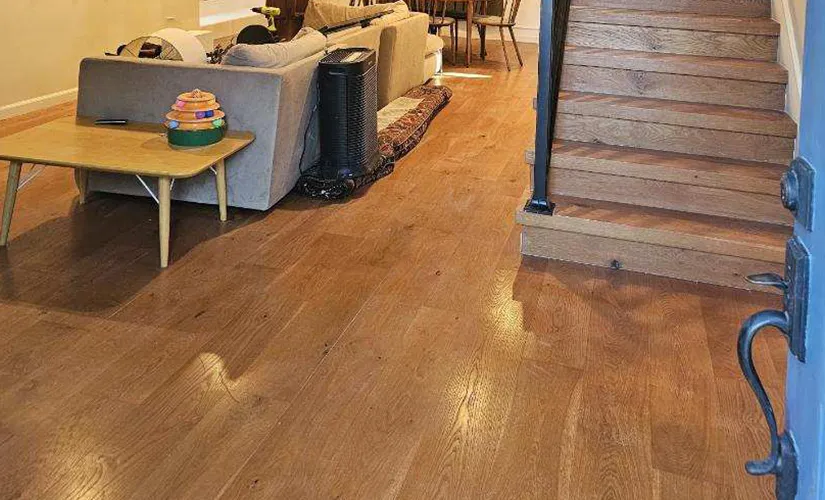
Hardwood flooring is an investment, so it needs a proper foundation before a single plank goes down. We first check subfloor levelness, moisture content, and structural condition, correcting any issues that could cause warping or gaps later. Planks are then installed with the right expansion gaps and fastening method for your specific wood type.
We take the time up front so your new hardwood floor doesn’t just look great on installation day; it stays flat, tight, and stable through years of temperature and humidity changes.
Every flooring project starts with planning, not installation, because layout decisions made early affect how a floor looks and performs for years. We map plank or board direction relative to natural light and the room’s shape, minimize awkward cuts near doorways, and carefully plan transitions between rooms and flooring types. Subfloor prep, whether that’s leveling, moisture barriers, or underlayment, happens before any material is laid down.
This upfront planning prevents squeaky boards, visible seams, and uneven transitions later, giving you a finished floor that looks intentional and performs well under daily foot traffic for years to come.
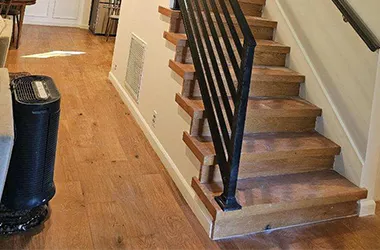
We inspect your subfloor and the condition of your existing flooring.
We help you select the right flooring material.
We level and prepare the subfloor properly.
We lay flooring with precise spacing and alignment.
We add trim and clean the finished space.
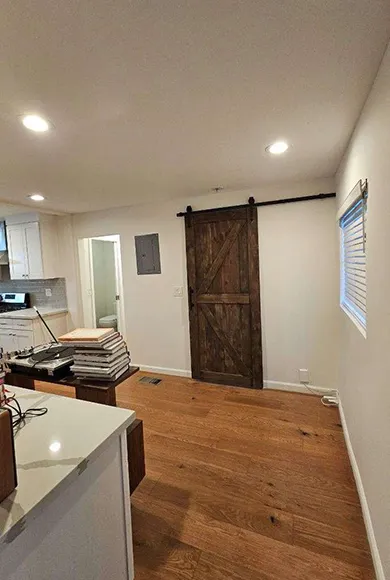
We install vinyl, laminate, and hardwood flooring for homes throughout the area. We help you compare durability, cost, and maintenance to find the right fit for you.
A single room typically takes one to two days. Whole-home installations take longer depending on square footage, material type, and subfloor preparation needs, which we'll outline upfront.
We ask that smaller items be cleared ahead of time, but our team handles larger furniture during the installation, minimizing disruption to your daily routine.
In some cases, yes, depending on the existing surface and new material. We first assess the subfloor condition and recommend the best approach for a stable, long-lasting result.